

Showing Safeguarding — 34 courses
All coursesCPD Courses
Online CPD courses for every member of staff, and the tracking to prove it
Assessed, certificated courses across safeguarding, SEND, wellbeing, health and safety and leadership. Staff learn at their own pace; leaders see completion across the school.
- courses, every one assessed
- 65
- schools tracking CPD on Teach HQ
- 2
- to start, no card required
- Free
Courses in the library
Live from the catalogue — never a hand-typed list, so what you see here is what you can actually enrol on.
-

Artificial Intelligence and Safeguarding
Generative AI appears in the 2026 edition of Keeping children safe in education as a distinct risk area. Not because it is fashionable, but because it changes three things about how harm reaches a child: scale, plausibility, and intimacy. This course is forty minutes on all three, for staff in…
- Duration
- 40 min
-
Child Sexual and Criminal Exploitation
Exploitation rarely looks like abuse from the outside. A child who goes missing, carries a knife, snaps at staff or turns up with new trainers is often handled as a behaviour problem, when each is a recognised sign of criminal or sexual exploitation. This course follows Keeping Children Safe in…
- Duration
- 60 min
-
Child-on-Child Abuse: Harassment, Violence and the HSB Continuum
Part five of Keeping children safe in education was substantially rewritten in 2026 around a continuum: from harmful sexual behaviour, through sexual harassment, to sexual violence. This course teaches staff to recognise and respond at the early end of that continuum, not only after a serious…
- Duration
- 60 min
-
Children Missing Education and Alternative Provision
Almost every harm shows up in attendance first. KCSIE 2026 calls absence and children missing education "a vital warning sign", and is clear that a school placing a pupil in alternative provision stays responsible for their safeguarding. This course covers who children missing education are, the…
- Duration
- 35 min
-
Children with a Social Worker and Looked-After Children
Most children with a social worker are not in care. They live at home, as children in need or on child protection plans, and the risk doesn't end when the plan does. This course covers all four groups: children with a social worker, looked-after children, previously looked-after children, and…
- Duration
- 35 min
-

Domestic Abuse and Its Impact on Children
A child who sees, hears or experiences the effects of domestic abuse is a victim in their own right. Since November 2025, police have had a statutory duty to tell a child's school through Operation Encompass. What the school does the next morning matters. Following Keeping Children Safe in…
- Duration
- 35 min
-
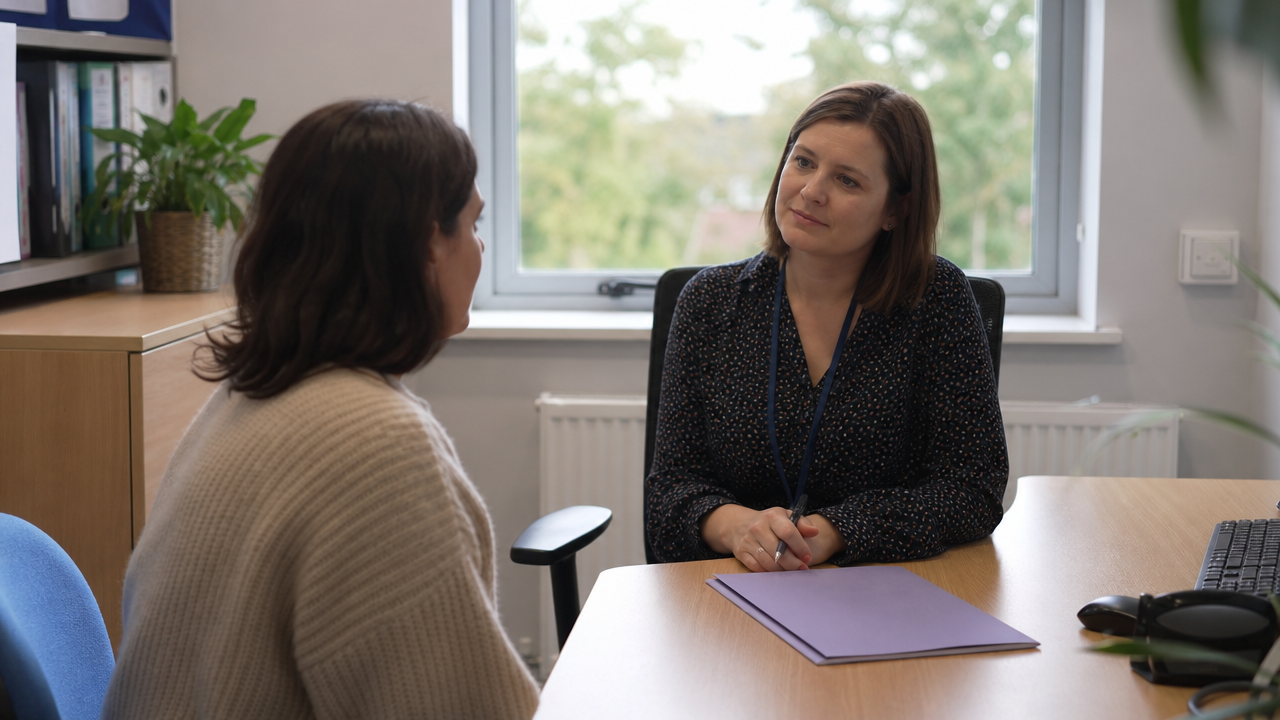
Early Help and Family Help: Thresholds and Referrals
Most safeguarding training teaches staff to spot harm and report it, then stops. This course covers what happens next: the four sections of help in Working Together to Safeguard Children 2026, including the new Family Help and the lead practitioner role; the section 17 and section 47 thresholds…
- Duration
- 35 min
-
Female Genital Mutilation: Recognition and Response
Female genital mutilation (FGM) is illegal, it is child abuse, and it is usually carried out over the summer holiday so a girl has time to recover before she is back in class. This course follows Keeping Children Safe in Education 2026 and the government's multi-agency statutory guidance on FGM. It…
- Duration
- 35 min
-
Female Genital Mutilation: The Mandatory Reporting Duty
The mandatory reporting duty falls on the teacher personally. If a girl under 18 tells you FGM has been carried out on her, or you see the physical signs, you must report it to the police yourself. Handing it to someone else does not discharge the duty. The course covers what FGM is, its prevalence…
- Duration
- 240 min
- CPD
- 4 CPD points
-
Filtering, Monitoring and Mobile Phones
Filtering and monitoring is the safeguarding duty most often delegated to the person least equipped to discharge it alone. The 2026 edition hardened it from a vague regularly to an effectiveness review at least annually, across all internet-connected devices, recorded. This course is forty-five…
- Duration
- 45 min
-

Honour or Faith-Based Abuse and Forced Marriage
Honour or faith-based abuse is one of the few areas of safeguarding where the normal, decent reflex (ring home, invite the family in, find someone who speaks the language) can put a child in serious danger. This course follows Keeping Children Safe in Education 2026 and the government's statutory…
- Duration
- 30 min
-

Information Sharing and Child Protection Records
Somebody knew, and the pieces never met. That finding runs through safeguarding reviews, and records are how the pieces meet. KCSIE 2026 sharpens the expectations: share what is relevant, necessary and in context, don't leave out what matters to risk, and transfer child protection files within 5…
- Duration
- 35 min
Four steps to a certificate
-
1. Find a course
Search the library or browse by subject area.
-
2. Enrol
One click, no cost, and it appears in your list.
-
3. Learn and be assessed
Work through it at your own pace, then take the assessment.
-
4. Keep the certificate
Pass and the certificate is issued to your record to download or print.
About the courses
How long does a course take?
Most take between 45 minutes and two hours. The longer safeguarding courses run to three. You can stop and come back where you left off.
Are they accredited?
Our courses are CPD-accredited and carry CPD points, which count towards the record you keep here or send elsewhere.
Are they kept up to date?
Yes. Courses tied to statutory guidance, such as Keeping Children Safe in Education, are reviewed when that guidance changes rather than once a year out of habit.
Can my school assign courses to staff?
Yes. A school or trust can assign the courses each role needs and see who has completed them.
Start with the one your role needs most
Sign in, pick a course and work through it whenever you have half an hour.